 anypaypos








SEARCH WHAT YOU WANT
Search allProductNews
SEARCH
Southeast Asia includes a wide range of retail formats, from independent stores and food outlets to supermarkets, shopping centers and expanding convenience-store networks.
Because store formats and software environments vary, there is no single POS configuration that fits every project. Hardware should be selected according to the checkout process, local software, payment integration and installation environment.
Touch-screen POS terminals can support staffed checkout in retail stores, restaurants and service counters. Buyers should evaluate counter space, screen size, required ports and compatibility with printers, scanners and customer displays.
Android and Windows platforms may both be used in the region, depending on the software provider and project requirements. The operating system should be selected together with the application developer.
For chain projects, maintaining a consistent hardware configuration can reduce repeated software testing and simplify employee training.
Fresh food plays an important role in supermarkets, fruit stores, markets and food-service businesses. Products sold by weight may require a label scale or POS scale.
An AI label scale can support product selection, weighing and label printing in a preparation area. An AI POS scale can connect weighing with final checkout at the counter.
Before deployment, buyers need to prepare local product names, price data, languages and label formats. Recognition models also need suitable product images and operating data.
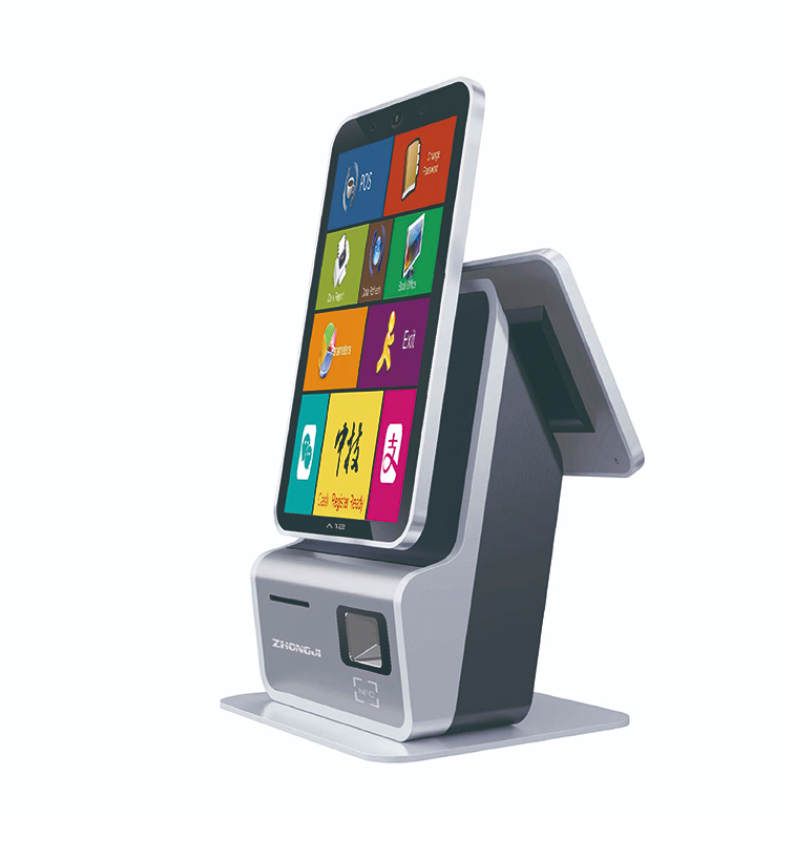
Self-service kiosks may be used for restaurant ordering, supermarket checkout, information display or selected payment processes.
A kiosk project needs to consider screen size, installation style, receipt printing, scanning and payment-terminal integration. Wall-mounted, desktop and floor-standing solutions can be selected according to the available space.
Local payment integration should be completed through the relevant software and payment partners. Hardware suppliers should not assume that one payment module can be used unchanged in every country.
Retail equipment may operate in warm, humid or high-traffic environments. Ventilation, cleaning, power quality and network stability should therefore be considered during installation.
International buyers should also confirm plug type, voltage, language, certification requirements, spare parts and after-sales communication.
Suzhou Pinnacle Electronic has presented its desktop POS terminals, AI checkout scales, AI label scales and self-service kiosks at retail exhibitions in Southeast Asia, including a Malaysia retail technology event.
Conclusion: Successful deployment in Southeast Asia requires more than translating the user interface. Hardware configuration, software compatibility, local payment integration, operating environment and after-sales planning should be confirmed for each market and project.
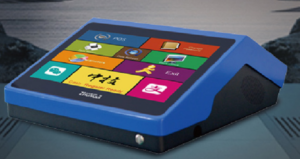
A practical guide for POS software companies comparing operating systems, interfaces, peripherals and hardware lifecycle requirements.
View details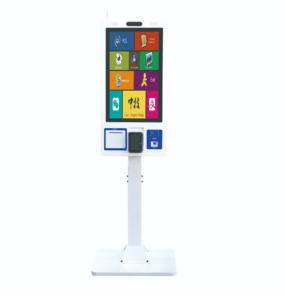
Review A12K self-checkout kiosk screen, printer, scanner, payment-module and installation options for retail and self-service projects.
View details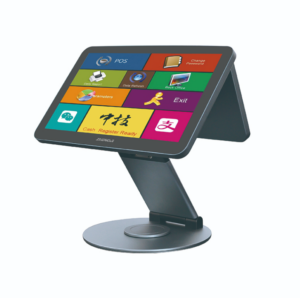
Discover how ANYPAYPOS supports OEM and ODM POS projects through configuration planning, enclosure design, module integration, samples and production.
View details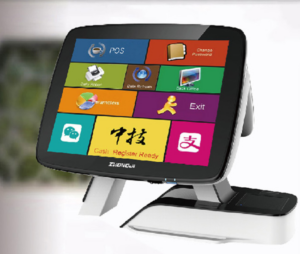
Explore how ANYPAYPOS develops, assembles and tests smart POS terminals through product design, hardware inspection, production and quality control.
View details