 anypaypos








SEARCH WHAT YOU WANT
Search allProductNews
SEARCH
For a retail store purchasing one POS terminal, small hardware differences may not immediately create a major problem. For a distributor, software company or chain-store project purchasing dozens or hundreds of terminals, however, hardware consistency becomes one of the most important factors in supplier selection.
A POS project usually involves more than a touchscreen computer. The approved terminal may need to work with receipt printers, barcode scanners, cash drawers, customer displays and software drivers. If the motherboard, interface layout or other key hardware changes after the sample stage, the software team may need to repeat compatibility testing.
This is why professional buyers should look beyond product appearance and price when comparing POS hardware manufacturers. The objective is to find a supplier that can reproduce an approved configuration consistently across future batches.
A good evaluation starts with the sample. Buyers should record the operating system, processor platform, memory, storage, screen configuration, interfaces and connected peripherals. This becomes the reference configuration for later production.
For OEM projects, branding details should also be included in the approval record. Logo position, enclosure color, product label, packaging and accessories should not be treated as informal requests. They should form part of the confirmed specification.
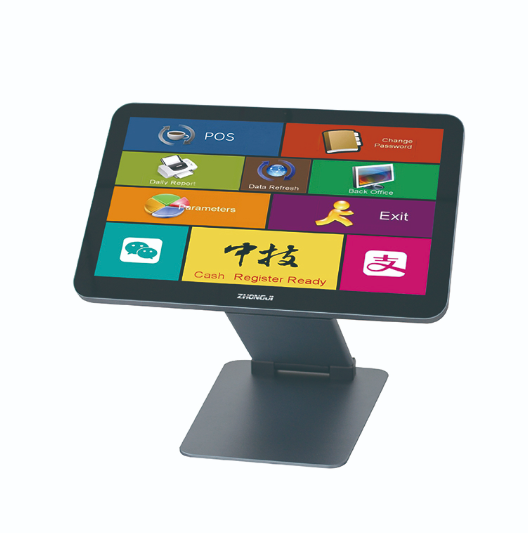
A sample should be tested in the same environment in which the final product will operate.
POS software should be installed and used for normal transactions. The buyer should test touch operation, application startup, receipt printing, barcode scanning, network communication and connected peripherals.
The test should also include less obvious situations. For example, what happens when the printer is disconnected? How does the software respond when the network connection is interrupted? Can the terminal restart normally after a sudden power loss?
These tests help the buyer understand whether the product is suitable for real store operation rather than simply looking good during a demonstration.
Physical details are equally important. The screen angle, counter footprint, cable position and maintenance access should be checked. If a printer or scanner is integrated into the terminal, employees need to be able to access it during daily service.
Once testing is complete, changes should be documented before the sample is approved. An approved sample should not simply mean “the machine works.” It should mean that the hardware, software and external configuration are clearly defined.
Repeat-order management becomes more important as the project grows.
The buyer and supplier should maintain a clear configuration document for each approved model. If a component needs to change because of supply conditions, the change should be communicated before production rather than discovered after delivery.
For software companies, this is particularly important because even a small hardware change can affect drivers or system behavior.
Buyers should also discuss spare-unit planning. A chain retailer may keep several terminals prepared with the same approved software image. When one store needs a replacement, the spare terminal can be installed without rebuilding the system from the beginning.
Long-term cooperation therefore depends on more than production capacity. It requires communication, change control, sample management and clear technical documentation.
A manufacturer that can maintain these processes gives distributors and software companies a more stable foundation for future projects.
Selecting a POS manufacturer should not be based only on price, appearance or a single successful sample. For B2B projects, the more important question is whether the approved hardware can be reproduced consistently over time.
By controlling specifications, testing complete workflows and documenting changes, buyers can reduce software compatibility risks and build a more reliable long-term supply relationship.
Learn about touchscreen POS manufacturer with practical guidance on hardware selection, integration and deployment for retail and hospitality projects from.
View details
A practical guide for distributors looking for reliable POS terminal manufacturers with OEM capability and stable supply.
View details
Learn how to choose the right POS terminal for retail stores based on performance, software compatibility, screen design and future expansion needs.
View details
Discover restaurant POS hardware solutions designed for multi-location restaurants, cafés and fast-growing food chains.
View details