 anypaypos









BUSCA LO QUE QUIERAS
Buscar en todoProductoNoticias
BUSCAR
POS distributors often work between manufacturers and end customers.
This creates an additional responsibility: the product presented to the customer during the sample stage should match what is delivered later.
An approved sample should therefore become more than a demonstration unit.
The distributor should record its hardware configuration, exterior design, operating system and accessories.
If the product includes optional modules, those should also be documented.
Photos can help confirm exterior details such as screen configuration, logo position and color.
This becomes especially important when the distributor sells the same model to several customers.
Without clear records, different orders can gradually become inconsistent.
Every repeat order should refer back to an approved specification.
The specification can include the processor platform, memory, storage, screen type, ports, power adapter, packaging and selected peripherals.
For private-label projects, the document should also cover branding.
The distributor should not depend entirely on old email messages or memory.
A structured configuration sheet makes communication easier.
If the manufacturer needs to change a component, the distributor can compare the proposed change against the approved specification.
The software team can then decide whether new testing is necessary.
This is particularly important for POS software companies that rely on specific drivers or communication interfaces.
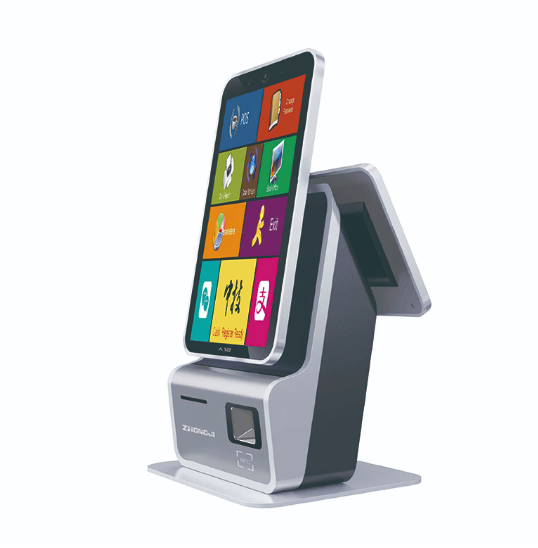
As a distributor adds customers, the number of possible hardware combinations can become difficult to manage.
One solution is to build several standard configurations instead of allowing unlimited customization.
For example, the distributor may offer one standard retail version, one restaurant version and one dual-screen version.
Customers can still choose options, but the core hardware remains controlled.
This simplifies inventory, technical support and spare-parts planning.
The distributor can also keep reference samples and spare units for major models.
If a customer needs a replacement, the same configuration can be supplied more quickly.
Repeat-order consistency is one of the foundations of a successful POS distribution business.
By treating samples as formal standards and controlling later hardware changes, distributors can reduce technical problems and provide customers with a more predictable product.
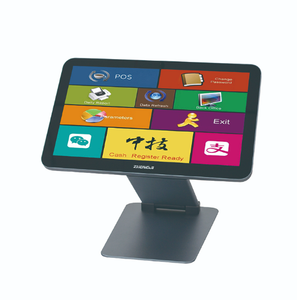
Learn how POS buyers can evaluate hardware consistency, sample approval, production control and long-term supply before selecting a POS manufacturer.
Ver detalles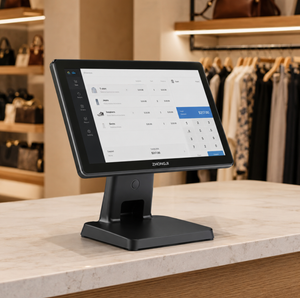
Descubre cómo elegir el terminal de punto de venta adecuado para tiendas minoristas teniendo en cuenta el rendimiento, la compatibilidad del software, el diseño de la pantalla y las necesidades de ampliación futuras.
Ver detalles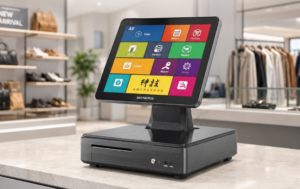
Descubre cómo los distribuidores de sistemas de punto de venta pueden crear una gama completa de productos de hardware que abarque terminales con pantalla táctil, balanzas con inteligencia artificial, quioscos y periféricos.
Ver detalles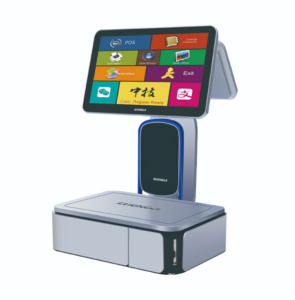
Descubre la báscula con IA LS1 de ANYPAYPOS, con consejos prácticos sobre la selección de hardware, la integración y la puesta en marcha para supermercados y tiendas de alimentación fresca.
Ver detalles